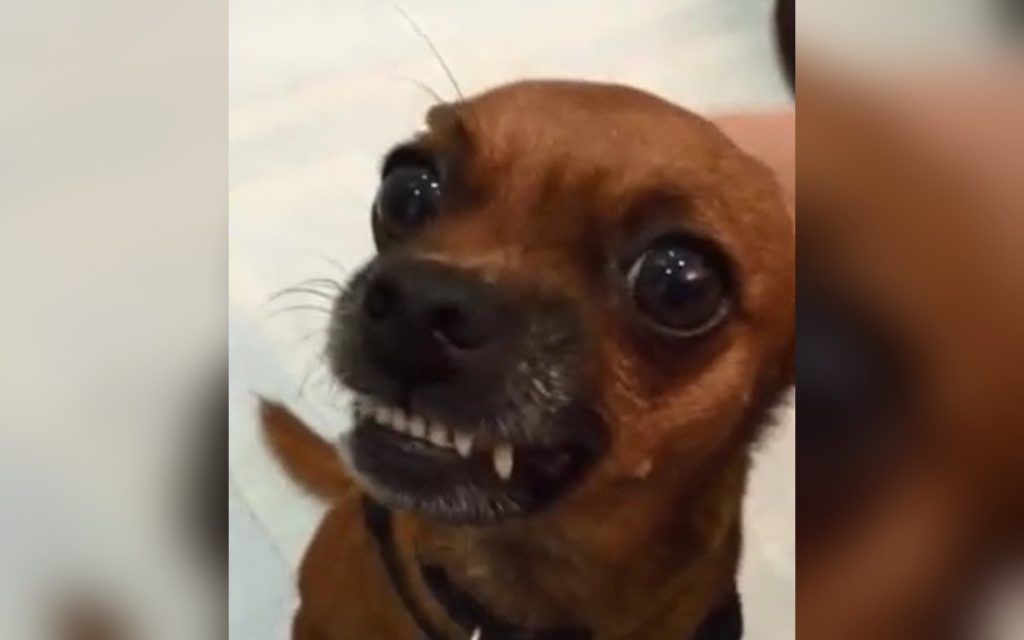
A growl can be upsetting to hear, especially from a dog you love. But growling is one of the most useful things a dog can do. A growl is communication. It tells you your dog is uncomfortable and wants something to stop or go away, and it gives everyone a chance to change the situation before anyone gets hurt.
Why dogs growl
Dogs growl for many reasons, and the same dog may growl for different reasons in different situations:
- Fear. A dog who is frightened by a person, another dog, or something being done to them may growl to create distance.
- Pain. A dog who hurts may growl when touched, picked up, or moved. Growling that starts suddenly, or happens when you touch a certain part of the body, often signals pain.
- Protecting something valuable. Some dogs growl when someone comes near their food, a chew, a toy, a resting spot, or a person.
- Frustration. A dog who is held back from something they want, such as another dog on the other side of a fence, may growl.
- Play. Many dogs growl during tug or wrestling games. Play growls usually come with loose, bouncy body language, and the dogs take turns.
Growling is part of a larger conversation
Most dogs give many quieter signals before they growl. These can include looking away, turning their head, licking their lips, yawning, freezing, stiffening, showing the whites of their eyes, pinning their ears back, or tucking their tail. If you miss those signals, a dog may move on to growling, then snarling or snapping, and finally biting.
Learning your dog’s quieter signals means you can help them long before they need to growl.
Why you should never punish growling
When you punish a dog for growling, they may stop growling, but they don’t stop feeling uncomfortable. The fear, pain, or worry that caused the growl remains. The dog learns that warning signals aren’t safe to give.
A dog who has learned not to growl may skip the warning and go straight to snapping or biting. People often describe these dogs as biting “out of nowhere.” Most of the time, the warning was there before, and someone took it away.
Punishment can also make your dog more afraid of you, or of the situation that caused the growl, so the next time is even harder.
What to do when your dog growls
- Stop what you are doing. Slowly move away, or stop the activity that led to the growl.
- Give your dog space. Do not stare, reach for them, or lean over them.
- Think about what happened just before. Who was there? What were you doing? Where were you? Was your dog eating, resting, being touched, or being moved?
- Write it down. A short list of every growl, with where, when, and what happened, can show a pattern.
- Change the situation for now. If your dog growls when people walk past their food bowl, feed them in a quiet room with the door closed. If they growl when you move them off the couch, invite them off with a treat instead of pushing or pulling them.
Keep children and visitors safe
Children are bitten more often than adults, often by a dog they know. Never leave young children alone with a dog, even one that has never growled. Teach children not to hug dogs, bother them while they eat or rest, or follow a dog that walks away. Give your dog a quiet place to go where no one, including children and visitors, will bother them.
When to get help
See your veterinarian if your dog’s growling is new, getting more frequent, or happens when you touch or handle them. Pain is a common reason for growling, and it can be hard to see.
If growling happens in more than one situation, if your dog has snapped or bitten, or if you are worried about anyone’s safety, a board-certified veterinary behaviorist or a qualified, reward-based trainer can help you understand why your dog is uncomfortable and how to help them feel better. See the Get help page for options, and read about hidden pain in dogs.