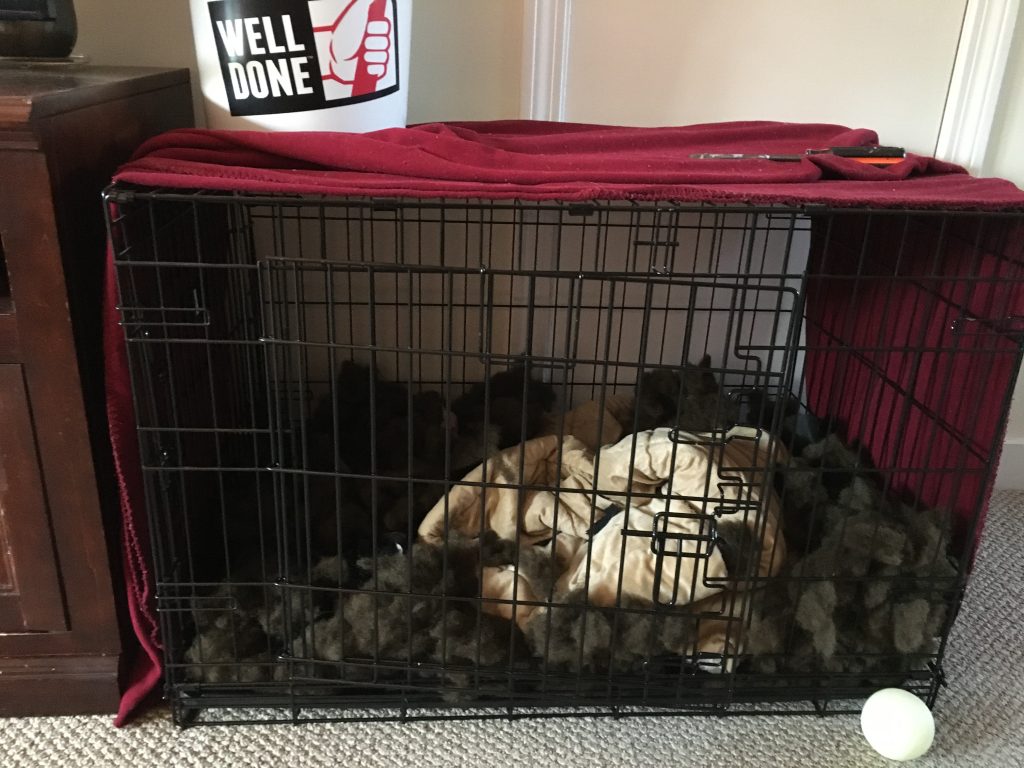
Some dogs bark, howl, chew, or have accidents only when they are left alone. For the dog, being alone can be truly distressing; for families, coming home to a destroyed doorframe or a note from the neighbors is exhausting. Board-certified veterinary behaviorists call this separation-related behavior. Many people call it separation anxiety, but that label can be misleading, because research shows these dogs are not all feeling the same thing. The plan that helps your dog depends on why your dog struggles, and the good news is that most dogs improve with the right help.
Signs your dog struggles when left alone
These behaviors happen mostly or only when your dog is alone, or when they are separated from a particular person:
- Barking, whining, or howling that starts soon after you leave
- Chewing or scratching at doors, door frames, windows, or crate bars
- Urinating or defecating in the house, even though your dog is house trained
- Drooling, panting, pacing, or trembling
- Trying to escape, sometimes hard enough to break teeth or nails
- Destroying furniture, pillows, or other things in the home
- Lying still and not moving the whole time you are gone, which is easy to miss
Not every dog feels the same thing
For many years, people assumed that these dogs were simply too attached to their caregivers. Researchers now know that is often not the case. Dogs can struggle when left alone for several different reasons, and many dogs have more than one:
- Frustration. This is one of the most common reasons. A dog may want to follow you, get out of a room, or get to something they see or hear outside, and they cannot. These dogs often focus their chewing and scratching on doors and exits, or they become worked up at a window and take it out on whatever is nearby.
- Fear of something that happens while they are alone. Some dogs are not worried about being alone at all. They fear things that happen when no one is home, such as trucks, construction, thunder, or a beeping smoke alarm, and being alone has come to predict those scary events.
- Panic about losing their safe person. Some dogs rely heavily on one person to feel safe. When that person leaves, they may howl, tremble, have accidents, or try hard to escape.
- Boredom. Some dogs are not distressed at all. They may be young, curious, or under-exercised, and without anyone to stop them, they chew, dig, or raid the trash.
- Pain. Pain is easy to overlook. For example, a dog who hurts from arthritis or an upset stomach has less ability to cope with stress, including being alone.
Because each needs a different plan, the first step is figuring out what is going on with your dog.
Start with your veterinarian
Ask your veterinarian to examine your dog before starting a behavior plan. Bladder conditions, incontinence, gastrointestinal disease, pain, and changes in brain function in older dogs can all look like trouble with being alone. For example, a dog with an upset stomach or diarrhea may have accidents or feel too uncomfortable to settle when no one is home.
Video is your most important tool
Set up a phone, tablet, or pet camera and record your dog the next few times you leave. Video shows when the behavior starts, what your dog does, where they do it, and what is happening around them. A dog who scratches at the door right after you leave is telling you something very different from a dog who starts barking an hour later when the mail truck arrives.
Your video also gives you a baseline, so you can see later whether your dog is truly improving.
Take the online separation assessment
Researchers and clinicians have developed questionnaires to help identify why a dog struggles when left alone. You can take one online at separation.zigzag.dog. You answer questions about what your dog does when you are away and how they behave when you are home, and at the end you get results that describe the type of separation-related behavior your dog most likely has.
Save or print your results, and bring them to your veterinarian along with your videos. Together, they give your veterinarian a much clearer picture of what is going on and where to start.
Busy is not the same as relaxed
Food toys are one of the most helpful tools for dogs who struggle when left alone, but you need to know what to look for in your video.
A dog licking a toy or lying in a sphinx position staring at the door may look fine at first glance. But a dog who is staring, alert, tense, or waiting is occupied, not relaxed. The goal is a dog who settles: lying on their side or curled up, with a soft body and eyes closed, sleeping or truly resting.
Some automatic treat dispensers and treat-tossing cameras can keep a dog alert and waiting for the next treat, instead of helping them rest. Watch your video carefully to see what your dog is doing.
Create an environment of plenty
Instead of one food toy, give your dog a variety of things to do when you leave. Dogs have a strong natural drive to search for and work for food, and using that drive helps many dogs feel more comfortable. Try different types of activities and see which ones your dog chooses and keeps doing:
- Licking: a lick mat spread with soft food, or a frozen food-stuffed toy
- Chewing: a long-lasting, safe chew
- Foraging: kibble or treats scattered in a snuffle mat, a towel, or a cardboard box
- Puzzles: a food puzzle your dog has already learned to solve when you are home
- Slow, steady rewards: a toy that releases food slowly over time
Watch your video to learn which activities your dog prefers, and which ones still work as your dog’s time alone gets longer. Offer the favorites every time you leave.
Make a safe haven
Choose a comfortable spot where your dog can rest, such as a bed in a quiet room with the blinds closed, white noise, and some of your worn clothing. Spend time there with your dog when you are home, and give treats and food toys there, so the spot becomes a place your dog likes to be. Some dogs feel safest in a crate. Others panic in one and can injure themselves trying to get out. If your video shows your dog working hard to escape a crate, use a safe room with a baby gate instead.
Rethink the traditional plan
Many people have been told to practice leaving for a few seconds, then a few minutes, and to never leave their dog alone longer than they can handle until training is done. That approach can help some dogs, but it can take many months; most families find it hard to follow, and it doesn’t address frustration, boredom, or fear of outside events. A plan built around why your dog struggles is usually more effective and easier to live with.
While you work on training, try to avoid leaving your dog alone longer than they can manage. Doggy daycare, a dog walker, a friend or family member, or bringing your dog to work can fill the gaps.
What not to do
- Do not punish your dog. Your dog cannot connect punishment after you come home with something that happened earlier, and punishment adds fear.
- Do not count on another dog to fix it. Some dogs feel better with a canine companion, but many do not, and for this reason alone, a second dog is a big decision.
Medication can help
For many dogs, medication is an important part of treatment. It can help your dog feel better while they learn and make training more successful. Ask your veterinarian whether medication would help your dog.
When to get help
Contact your veterinarian if your dog injures themselves, escapes, will not eat while you are gone, or is getting worse. A board-certified veterinary behaviorist can help you figure out why your dog struggles and build a plan that fits your dog and your family. See the Get help page for options.
Source: de Assis LS, Matos R, Pike TW, Burman OHP, Mills DS. Developing diagnostic frameworks in veterinary behavioral medicine: disambiguating separation related problems in dogs. Frontiers in Veterinary Science. 2020;6:499.