Dogs are very good at hiding pain. A dog with sore joints, a painful tooth, or an upset stomach rarely cries out. Instead, the signs are usually small changes in how they move, rest, and behave. These changes are easy to mistake for getting older, being stubborn, or going through a phase.
Pain also plays a part in many behavior concerns. In a review of 100 dog behavior cases, researchers found that pain was involved in about one-third, and noted that in some situations it may be close to 80 percent. Treating pain can make a dog more comfortable and is often key to improving their behavior.
Changes in movement
- Slow to get up after resting, or stiff for the first few steps
- Hesitating before jumping into the car or onto the couch, or no longer jumping at all
- Avoiding stairs or slippery floors
- Lagging behind on walks, sitting or lying down during walks, or wanting shorter walks
- Sitting with one back leg sticking out to the side, or lying down in slow stages
- Hopping with both back legs together when running
- Carrying more weight on the front legs, or holding a paw up slightly
- Toenails worn down unevenly
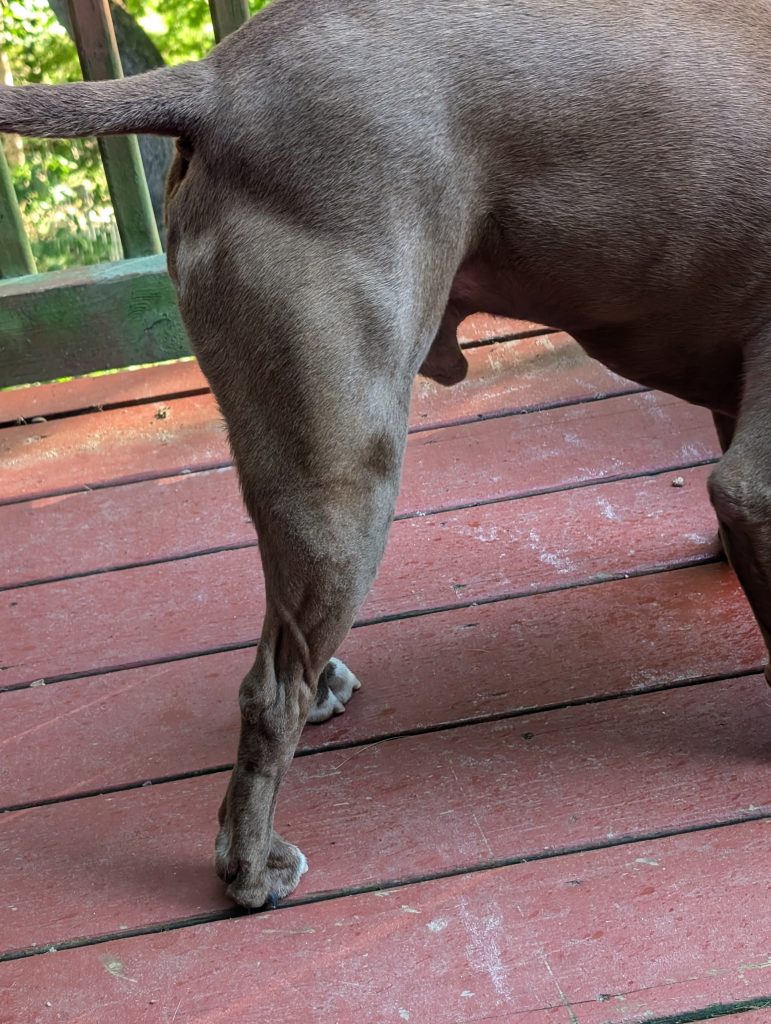
- Less muscle over the back legs and hips
Changes in behavior
- Growling, snapping, or moving away when touched, brushed, picked up, or having their nails trimmed
- Less patience with other dogs, children, or being bumped
- Less interest in play, toys, or walks
- Restlessness at night, trouble getting comfortable, or panting while resting
- Licking or chewing one area, such as a joint, a paw, or the side of the body
- Sleeping more, or spending more time alone
- New fears, such as fear of noises or of certain floors
- Accidents in the house, because squatting or going down steps to the yard hurts
- Dropping food, chewing on one side, or eating more slowly, which can be signs of mouth pain
Changes in posture and expression
- A hunched back, a tucked belly, or a head held low
- Ears pulled back, squinting, or a tense face
- Stretching with the front end down and the rear end up more than usual, which can be a sign of belly pain
Why pain can change behavior
A dog in pain may growl when touched because they expect it to hurt. Over time, some dogs start growling when a hand reaches toward them, even before they are touched, because they have learned that touch leads to pain. Treating the pain is important, and dogs who have learned to expect pain may also need behavior modification to feel comfortable with touch again.
What you can do
- Write it down. Keep a list of the changes you notice and when they happen.
- Take videos at home. Record your dog getting up, walking, using stairs, and jumping. Many dogs hide signs of pain at the veterinary clinic because they are excited or nervous, so videos help your veterinarian see what you see.
- See your veterinarian. An exam, X-rays, and blood work can help find the cause. If your veterinarian suspects pain but cannot find a clear cause, they may suggest a trial of pain medication. If your dog’s behavior improves with pain relief, that suggests pain was part of the change.
- Never give your dog human pain relievers. Ibuprofen, naproxen, and acetaminophen can cause serious harm to dogs. Give only medication prescribed by your veterinarian.
- Make your home easier to move around in. Put rugs or runners on slippery floors, use ramps or steps for the car and furniture, and offer a thick, supportive bed. Keeping your dog at a healthy weight, trimming nails, and providing regular, gentle exercise also help.
- Respect your dog’s “no.” If your dog moves away when you touch them, let them go. Ask family members, especially children, to let your dog come to them.
When to call your veterinarian right away
Call your veterinarian or an emergency veterinary clinic right away if your dog cries out in pain, will not move, has a sudden limp that does not improve within a day, has trouble breathing, or has a swollen belly and is trying to vomit without bringing anything up. A swollen belly with unproductive retching can be a sign of bloat, which is an emergency.
For more help, see the Get help page. If your dog is also afraid of storms or fireworks, read about fear of noises, because pain and fear of noises are often connected.
Source: Mills DS, Demontigny-Bédard I, Gruen M, et al. Pain and problem behavior in cats and dogs. Animals. 2020;10(2):318.