Fear of loud noises is one of the most common behavioral concerns in dogs. Thunderstorms, fireworks, gunshots, construction noise, and unfamiliar travel sounds can frighten a dog. For some dogs, the fear is mild. For others, a storm means hours of panting, trembling, and trying to escape, and some dogs injure themselves or run away. Without help, fear of noises often gets worse over time, so it is worth taking seriously even when it seems mild.
Signs your dog is afraid
- Panting when they are not hot, trembling, pacing, or drooling
- Hiding, or staying very close to you
- Ears pulled back, tail tucked, body lowered, lip licking, or yawning
- Whining, barking, or howling
- Trying to escape, such as digging at doors, chewing door frames, or jumping through windows
- Refusing food, or having accidents in the house
- Restlessness that lasts long after the noise has stopped
Some dogs start acting afraid before a storm arrives. They may notice changes in air pressure, wind, the darkening sky, or static electricity before people hear any thunder.
Fear of noises and pain
Researchers found that dogs with noise-related fear who also had muscle or joint pain, such as arthritis, tended to develop that fear later in life and avoided more places than dogs without pain. One explanation is that a loud noise makes a dog startle and tense their muscles, which can hurt sore muscles and joints. The dog then connects the noise with the pain.
If your dog’s fear started or worsened as an adult, or if your dog is older, ask your veterinarian to check for pain. Read more about hidden pain in dogs.
How to help during a storm or fireworks
- Offer a safe space. A quiet room in the middle of the home, a basement, a closet, or a blanket-covered crate can all work. Leave a crate door open unless your dog is already comfortable in a closed crate. Many dogs pick their own spot, such as a bathroom or under a bed, and it is fine to let them choose. Add bedding and water.
- Block the sound and flashes. Close windows, curtains, and blinds. Play white noise, a fan, or music to help cover the booms.
- Stay with your dog and comfort them if they want comfort. Comforting a frightened dog does not reward fear. Fear is an emotion, and talking softly to your dog or petting them when they come to you does not make them more afraid. Some dogs prefer you to sit nearby without touching them, and that is fine too.
- Give them something to do. A food-stuffed toy or a lick mat can help if your dog can eat. A dog that won’t eat during a storm is very frightened, and that is useful information to share with your veterinarian.
- Never punish fearful behavior. Punishment increases fear and can make your dog even more frightened next time.
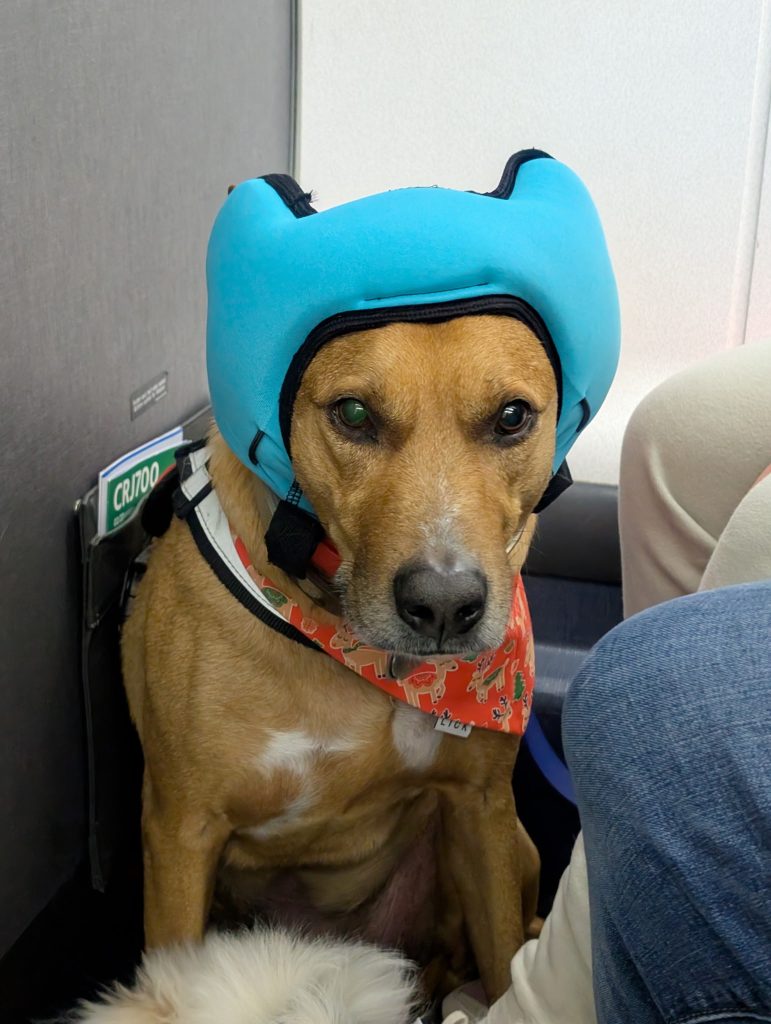
- Consider an ear covering or a snug wrap. Some dogs are more comfortable wearing a fitted head covering that muffles sound, or a snug body wrap. Introduce these on quiet days first, with treats, so your dog is already comfortable wearing them before a storm.
Plan ahead for fireworks
- On holidays such as the Fourth of July and New Year’s Eve, walk your dog and take them out to go to the bathroom before dark.
- Keep your dog indoors and on a leash whenever they go outside, even in a fenced yard. Frightened dogs can climb or dig out of yards they have never left before, and animal shelters often see more lost dogs around the Fourth of July.
- Check that your dog’s ID tags and microchip information are up to date.
- If you know fireworks are coming, talk with your veterinarian a few weeks ahead about medication.
Noises and travel
Travel combines many sounds a dog may not be used to: road noise, horns, trucks passing, car doors, and in hotels or rental homes, elevators, ice machines, hallway voices, and doors closing at night. A dog who is already sensitive to noise may find a trip very hard.
- Practice car rides first. Start with short trips to fun places, not only to the veterinarian. Bring special treats or a food-stuffed toy that your dog gets only in the car.
- Keep your dog secure. Use a crate that is tied down or a harness attached to a seat belt. A covered crate can also block some of the view and sound. Never let a dog ride loose or in the back of an open truck.
- Add familiar sounds and smells. Play white noise or music, and bring your dog’s own bed or a blanket that smells like home.
- Choose a quiet room. In a hotel, ask for a room away from the elevator, ice machine, and stairwell, and run a fan or white noise at night.
- Plan breaks. Stop every few hours in a quiet spot so your dog can walk, drink, and go to the bathroom. Always keep them on a leash, because a frightened dog in an unfamiliar place can bolt.
- Watch for car sickness. Drooling, lip licking, yawning, and vomiting can be signs of nausea, fear, or both. Your veterinarian can prescribe medication for motion sickness, and a dog who feels sick in the car often becomes afraid of car rides.
- Talk with your veterinarian before a big trip. Ask whether medication to reduce fear would help your dog. If you plan to fly, ask your veterinarian first. Most airlines and veterinarians advise against sedating dogs for air travel, because sedation can affect breathing and balance.
Medication can help
For many dogs, medication is an important part of treatment, not a last resort. Your veterinarian can prescribe a medication to give before a storm, fireworks, or a trip to reduce fear. For dogs with frequent or severe fear, a daily medication may also help. Some medications are specifically labeled for noise aversion in dogs, and several others are also used. Your veterinarian will choose the right one based on your dog’s health and needs.
Ask your veterinarian for a medication that reduces fear, not one that only makes your dog sleepy. Some sedatives can leave a dog unable to move or respond while they are still frightened.
Never give your dog human medication or leftover medication without talking to your veterinarian first.
Long-term training
With a plan called desensitization and counterconditioning, a dog learns to feel differently about a sound. You play a recording of the sound at a very low volume while your dog gets something they love, such as special treats or a favorite game. Over days and weeks, you raise the volume a tiny bit at a time, always staying below the level that frightens your dog.
This works best with guidance from a veterinary behaviorist or a qualified, reward-based trainer, and it is best started in the off-season. A real storm partway through training can set progress back. Recordings also cannot copy the pressure changes and flashes of a real storm, so storm fear can take longer to improve than fear of fireworks.
When to get help
Talk with your veterinarian if your dog injures themselves, tries to escape, destroys things, or stays frightened for hours, or if the fear is getting worse. For more options, see the Get help page.
Source: Lopes Fagundes AL, Hewison L, McPeake KJ, Zulch H, Mills DS. Noise sensitivities in dogs: an exploration of signs in dogs with and without musculoskeletal pain using qualitative content analysis. Frontiers in Veterinary Science. 2018;5:17.