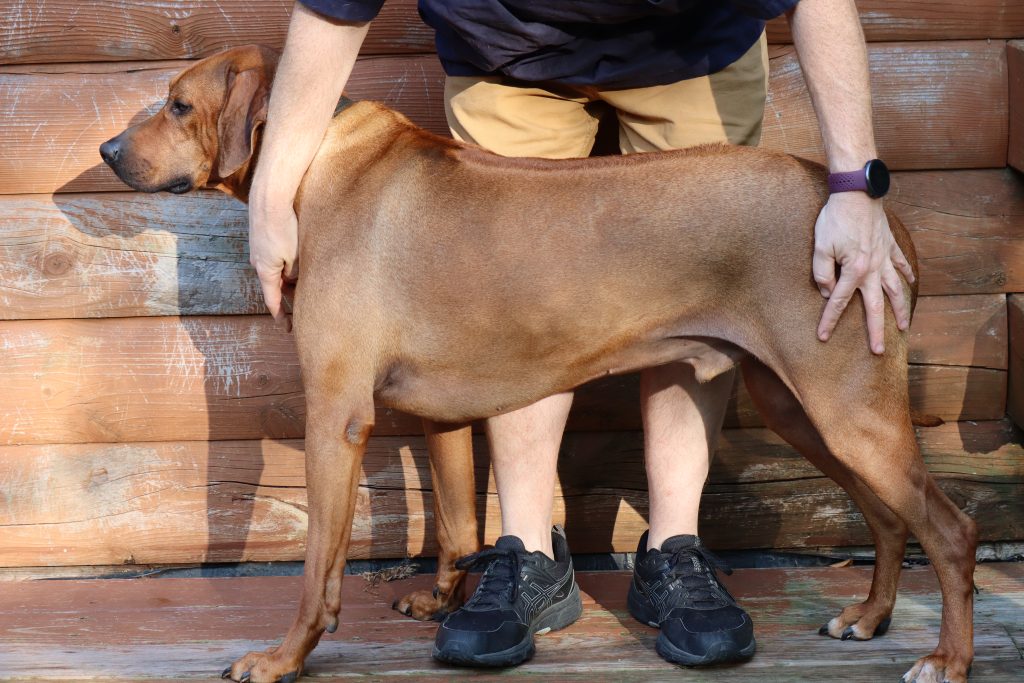
Many pets fear veterinary visits, grooming appointments, and being handled by strangers. For years, the answer was more restraint: more people holding the pet down, tighter grips, and getting the job done as fast as possible. We now know that forceful restraint worsens fear, causes frustration, increases the risk of injury to both pets and people, and teaches pets that the next visit will be even scarier. Low Stress Handling® offers a better way.
What is Low Stress Handling®?
Low Stress Handling® is an educational program developed by the late Dr. Sophia Yin, a veterinarian and applied animal behaviorist. It teaches veterinary teams and other pet professionals humane and effective ways to handle and restrain dogs and cats. The program is built on understanding and communicating with each animal, reading their body language, and adjusting what we do based on how they are feeling.
Dr. Yin said, “With good handling, the patient should get better and not worse.” That idea is at the heart of the program. Every interaction is a learning experience, and skillful handling helps a pet become more comfortable over time.
Dr. Yin’s handling principles
Dr. Yin described ten handling principles. In plain language, they are:
- Start in a comfortable setting. A quiet room, good footing, and no rushing.
- Prevent sudden movements before they start, such as pacing, squirming, or escape attempts, by positioning yourself thoughtfully.
- Support the animal’s body, so they feel steady and are not afraid of falling.
- Move slowly and deliberately to help animals stay comfortable and relaxed.
- Position your hands and body so you can gently guide movement in any direction.
- Wait until the animal is relaxed before starting a procedure.
- Use the least restraint needed, and no more.
- Avoid prolonged struggling. If an animal struggles for more than a few seconds, stop and change the plan.
- Use rewards and distractions, such as food, to create positive associations.
- Adjust to each animal’s response, because every animal is an individual.
Low Stress Handling® at the veterinary visit
At the veterinary hospital, Low Stress Handling® starts before the pet ever arrives.
- Before the visit. Carrier training for cats, practice car rides, and handling practice at home help. For fearful pets, your veterinarian may prescribe medication before the visit. Talk with your veterinary team about what might help your pet.
- Arrival. Quiet waiting areas, separate spaces for cats and dogs, and moving pets straight into an exam room reduce stress.
- The exam. The team lets the pet explore the room, offers food, examines them where they are most comfortable, such as on the floor, in a lap, or in the bottom of the carrier, and uses gentle, minimal restraint.
- Watching body language. The team watches for signs of fear and stops or changes the plan when a pet is struggling. For some pets, the right choice is to stop and reschedule with medication or sedation, rather than pushing through.
- Planning for next time. The team records what worked for each pet, so every visit builds on the last one.
For cats, the 2022 Cat Friendly Veterinary Interaction Guidelines from the American Association of Feline Practitioners and the International Society of Feline Medicine (currently Feline VMA) describe current best practices, and the second edition of Dr. Sophia Yin’s Low Stress Handling® and Behavior Modification of Dogs and Cats follows those guidelines.
Beyond the veterinary hospital
The same principles apply anywhere people handle pets. When you choose a pet professional, ask whether they are trained in Low Stress Handling® or a similar program, and watch how they interact with your pet.
Groomers
Grooming involves a lot of handling, often of sensitive areas such as feet, ears, and faces, along with loud dryers and clippers. A low stress groomer lets your pet settle in, takes breaks, uses food and gentle handling, introduces tools gradually, and stops when a pet is very afraid rather than forcing the job. Never leave a pet unattended on a grooming table or in a grooming loop. If your pet is very afraid of grooming, talk with your veterinarian. Some pets do best with short sessions, home practice, or grooming under sedation.
Daycare
A good daycare carefully matches dogs by size, age, and play style; keeps play groups small; gives dogs scheduled rest; and has staff trained to read body language and step in before play becomes too intense. Not every dog enjoys daycare. Dogs who are afraid of other dogs, or who become frustrated or overwhelmed, may do better with other options.
Pet sitters and dog walkers
A low stress pet sitter or dog walker lets your pet approach on their own terms, especially cats, follows your pet’s routine, and uses reward-based methods only. For reactive dogs, a walker should walk one dog at a time, use a well-fitted harness, and avoid places where your dog may meet triggers up close. They should never use corrections or aversive tools. Read more about leash reactivity in dogs.
Shelters and rescues
Shelters are stressful places, with noise, unfamiliar smells, and many strangers. Low Stress Handling® helps shelter staff and volunteers move, examine, and care for animals with less fear and lower bite risk. Low Stress Handling® in the shelter also helps animals show their true personalities, which can help them find the right homes.
Trainers
Trainers handle pets to fit equipment, practice grooming, and teach cooperative care. Reward-based trainers apply the same idea: watch the animal, go at a pace the animal is comfortable with, and let them decide when they are ready. Read more about how to choose a trainer.
What you can do at home
- Practice gentle handling of paws, ears, mouth, and body, paired with food, so handling predicts good things.
- Teach your pet to enter a carrier or crate on their own.
- Teach cooperative care behaviors, such as a chin rest, so your pet can tell you when they are ready. Read more about cooperative care.
- Bring treats and your pet’s favorite mat to appointments.
- Speak up for your pet. You know them best. It is okay to ask for a break, a different approach, or a plan for next time.
Learn more about the Low Stress Handling® books on our Books page.
Sources: Yin S. Low Stress Handling, Restraint and Behavior Modification of Dogs and Cats. CattleDog Publishing; 2009. Rodan I, Dowgray N, Carney HC, et al. 2022 AAFP/ISFM Cat Friendly Veterinary Interaction Guidelines: approach and handling techniques. Journal of Feline Medicine and Surgery. 2022;24(11):1093-1132. Lloyd JKF. Minimizing stress for patients in the veterinary hospital: why it is important and what can be done about it. Veterinary Sciences. 2017;4(2):22. Riemer S, Heritier C, Windschnurer I, Pratsch L, Arhant C, Affenzeller N. A review on mitigating fear and aggression in dogs and cats in a veterinary setting. Animals. 2021;11(1):158.