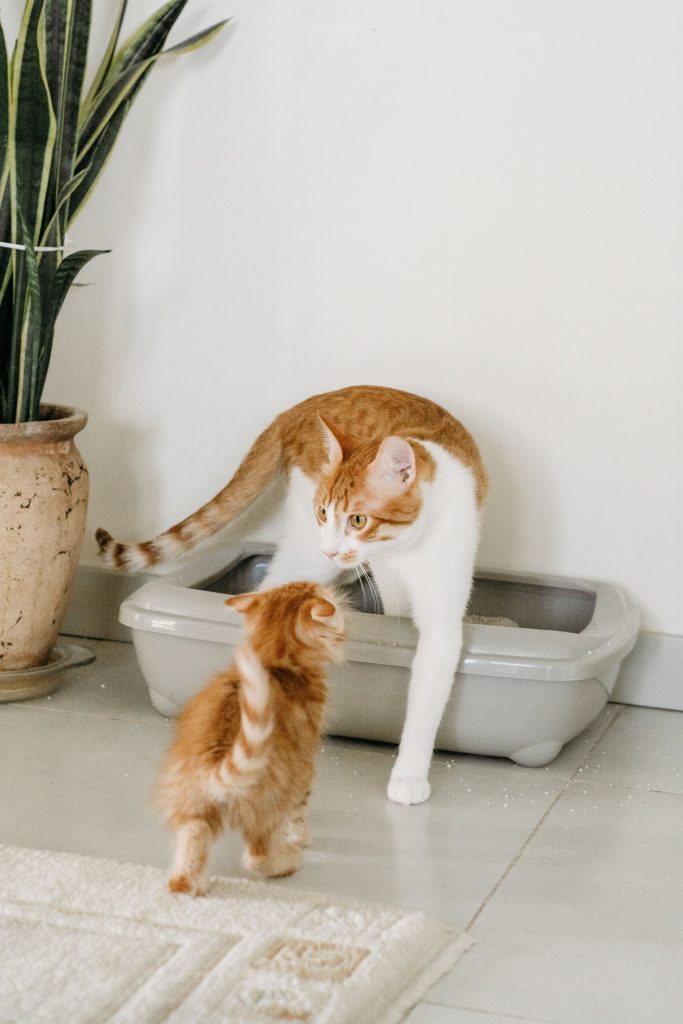
Litter box problems are among the most common behavioral concerns in cats and a leading reason cats lose their homes. Many of these behaviors start with a box the cat does not like. Cats are particular about where they urinate and defecate, and a box that seems fine to people may be too small, too dirty, too hard to reach, or in a place where the cat does not feel safe. The good news is that a few simple changes can prevent most of these problems.
Start with your veterinarian
If your cat has stopped using the litter box, see your veterinarian before changing anything else. Bladder inflammation, urinary crystals or stones, kidney disease, diabetes, constipation, and arthritis can all lead a cat to urinate or defecate outside the box.
If a cat strains in the box, goes back again and again, cries while trying to urinate, or passes only a few drops of urine, see a vet right away. In a male cat, these signs can mean a urinary blockage, which is life-threatening. Call your veterinarian or an emergency veterinary clinic immediately.
Size: bigger is better
Most litter boxes sold in pet stores are too small for an adult cat. A good guideline is a box at least 1.5 times the length of your cat, measured from the tip of the nose to the base of the tail. Your cat should be able to step in, turn around, dig, and squat without touching the sides.
Large plastic storage bins make excellent litter boxes. Choose one that is long and wide, and if the sides are tall, cut a low opening on one side so your cat can walk in.
For kittens, senior cats, and cats with arthritis, choose a box with at least one low side. A cat who hurts when they climb over a high edge may start going somewhere easier to reach.
Number: one per cat, plus one
Provide at least one litter box per cat, plus one more. Two cats need three boxes, and three cats need four.
Place the boxes in different locations, not side by side. From your cat’s point of view, a row of boxes in one spot counts as one location, and one cat can block another from reaching them all at once.
Even a home with one cat benefits from two boxes. Some cats like to urinate in one box and defecate in another. If you are bringing home a new cat, read how to introduce a new cat to your cat, which explains how to give each cat their own space and resources from the start.
Location: quiet, private, and easy to reach
- Put boxes where your cat spends time. In a multi-level home, place a box on each floor your cat uses.
- Choose a quiet spot. Keep boxes away from loud appliances such as washing machines, dryers, and furnaces. A sudden noise while your cat is in the box can be enough to make them avoid it.
- Keep boxes away from food and water. Cats prefer to eat and drink away from where they eliminate.
- Give your cat a view and an escape route. A box at the end of a narrow hallway or inside a closet can feel like a trap, especially if another cat or a dog might be waiting outside. Your cat should be able to see who is coming and leave in more than one direction.
- Avoid moving the box. If you need to move a box, set up a new box in the new spot and leave the old one in place until your cat is using the new one.
Litter: what most cats like
Most cats prefer unscented, fine-grained clumping litter that feels like sand. Scented litter and air fresheners near the box smell pleasant to people, but cats have a much more sensitive sense of smell, and many cats avoid strong scents.
Start with about 1 to 2 inches (3 to 5 centimeters) of litter, then watch your cat. Some cats like a little more, and some like less.
If you want to try a new litter, put it in a second box next to the usual box and let your cat choose. Changing all the litter at once can lead some cats to stop using the box.
Skip plastic liners. Claws catch on them, and many cats don’t like how they feel.
Covered, uncovered, and self-cleaning boxes
Many cats prefer uncovered boxes. A cover traps odor inside, right in your cat’s nose, and blocks their view, so they cannot see another pet coming. Some cats use covered boxes without trouble, so if your cat is happy with one, you don’t need to change it. If you are not sure, offer one of each and let your cat decide.
Self-cleaning boxes can save time, but the motor noise and movement frighten some cats. If you use one, watch your cat closely at first and keep a regular box available too.
Keep the box clean
Scoop every box at least once a day, and twice a day if you can. Cats are clean animals, and a dirty box is one of the most common reasons they look for somewhere else to go.
Every week or two, empty the box completely and wash it with warm water and mild, unscented soap. Avoid bleach and strongly scented cleaners, such as citrus or pine products, because the lingering smell can keep your cat away.
Replace plastic boxes about once a year, or sooner if they are badly scratched. Scratches hold odor even after washing.
Signs your cat does not like the box
A cat may keep using a box they don’t like for a while. Watch for these clues:
- Perching on the edge of the box instead of standing in the litter
- Rushing in and out, or not digging and covering
- Scratching the wall or floor outside the box instead of the litter
- Urinating or defecating right next to the box
These clues suggest something about the box needs to change, even if your cat is still using it. Fixing the problem early is much easier than solving a house-soiling problem that has gone on for months.
If your cat has accidents
Start with a visit to your veterinarian to rule out medical causes. Clean accidents with an enzyme cleaner made for pet urine so the smell doesn’t draw your cat back to the same spot.
Never punish your cat for an accident, and never rub their nose in it. Punishment doesn’t teach a cat where to go, and it can make them afraid of you and the box.
If the problem continues after you treat medical issues, ask your veterinarian about a referral to a board-certified veterinary behaviorist, or see the Get help page for options. You may also find the five pillars of a healthy feline environment helpful, because stress in the home can play a part in litter box problems.
Source: Carney HC, Sadek TP, Curtis TM, et al. AAFP and ISFM guidelines for diagnosing and solving house-soiling behavior in cats. Journal of Feline Medicine and Surgery. 2014;16(7):579-598.