Most of what we know about animal body language comes from dogs and cats. We learn to read ears, tails, eyes, and faces. Snakes have none of those signals in the same way. They cannot close their eyes, they have no ears to pin back, and their faces do not change expression. Because of this, many caregivers assume snakes do not communicate at all.
They do. Snakes tell us how they feel through how they move, how they coil, how tightly they hold on, and how they use their tongue. Most bites and escapes during handling happen after a snake has already shown, in small ways, that they are unsure. When you can read those early signs, you can slow down, change what you are doing, and give your snake a choice. Handling then becomes easier and safer for both of you.
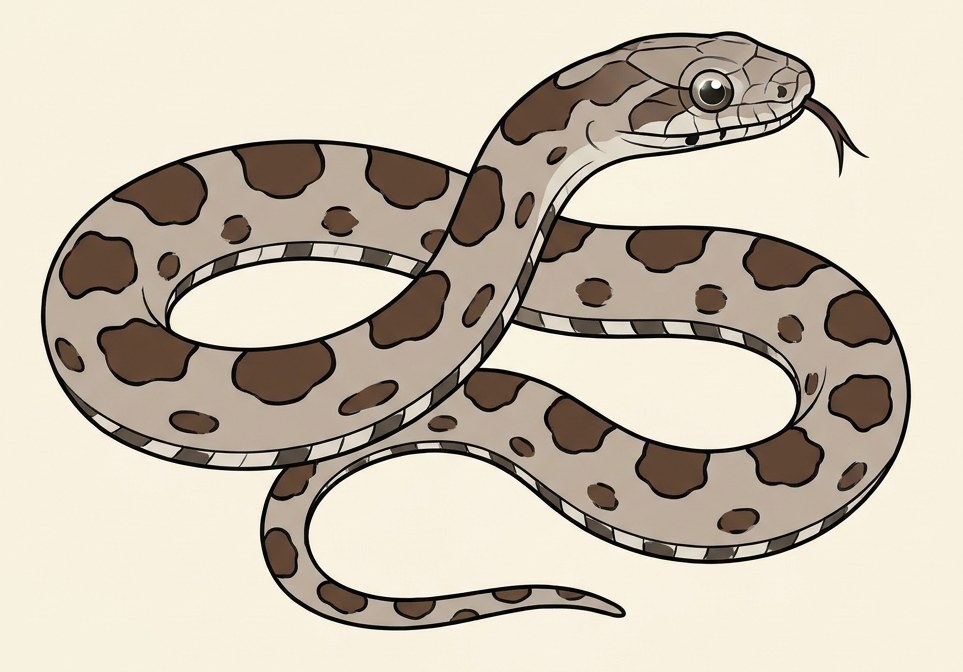
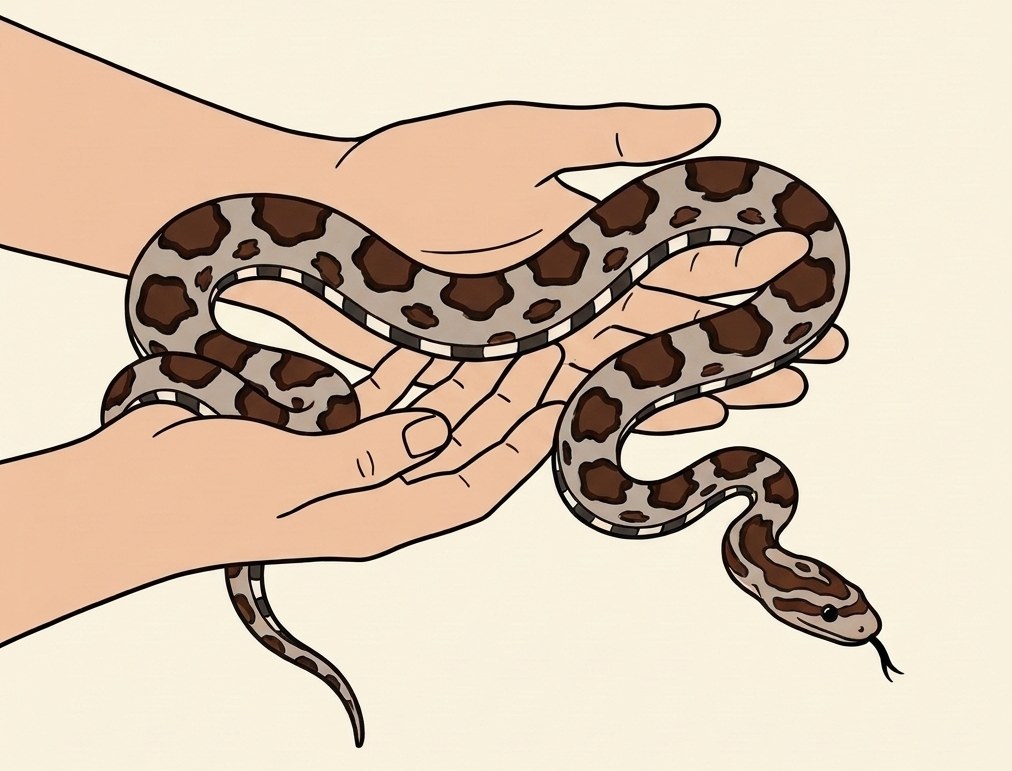
The illustrations in this article and in the companion interactive guide, Reading Your Snake, are based on photos of a young Slowinski’s corn snake in my own home.
Three levels of snake body language
A helpful way to read a snake is to sort what you see into three levels: comfortable, out of their comfort zone, and very distressed. This framework comes from A General Guide to Snake Body Language, a free illustrated poster by Lili Chin created with snake behavior educator Lori Torrini. Body language varies by species and by individual, so it is worth learning what is normal for your own snake.
Comfortable and relaxed
A comfortable snake rests in soft, open coils, often in a hide or a warm spot. When exploring, they move slowly and smoothly, sometimes creeping forward in a straight line. They flick their tongue at a steady pace, which means they are investigating their surroundings. When you hold a comfortable snake, they wrap lightly around your hand or arm for support, without squeezing.
What to do: Keep going. Support your snake’s body in two or more places, let them move from hand to hand, and keep handling sessions short so they end before your snake has had enough.
Out of their comfort zone
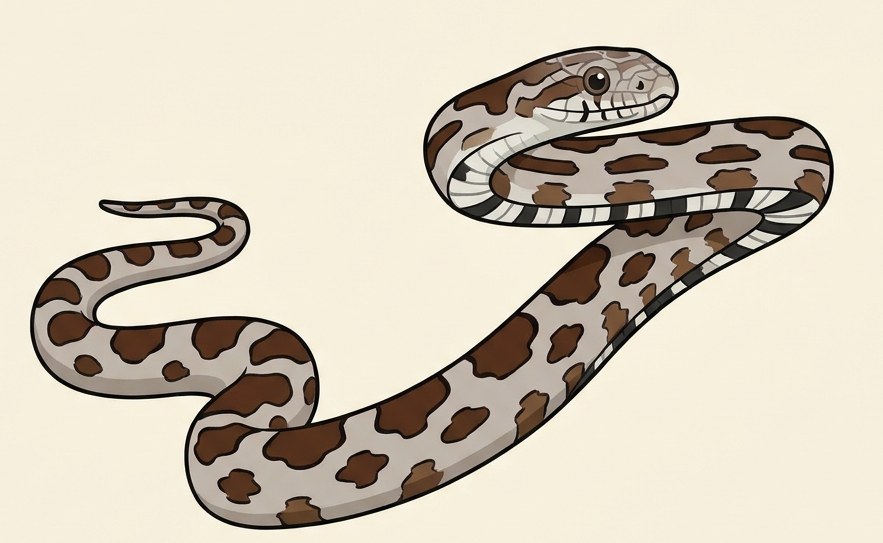
These signs mean your snake is unsure about what is happening. You may see your snake stop moving and stop flicking their tongue, as if waiting to see what happens next. They may draw their head and neck back into an S shape, away from your hand. Some snakes make quick, twitchy movements with brief freezes in between, or lift the front third of their body off the ground to watch. A grip that keeps getting tighter around your hand or arm often means your snake does not feel secure.
What to do: Pause. Lower your snake to a surface or support more of their body. Move slowly, and approach from the side instead of from above. Wait for steady tongue flicking and exploring to return before you continue. If your snake does not settle, end the session.
Very distressed or overwhelmed
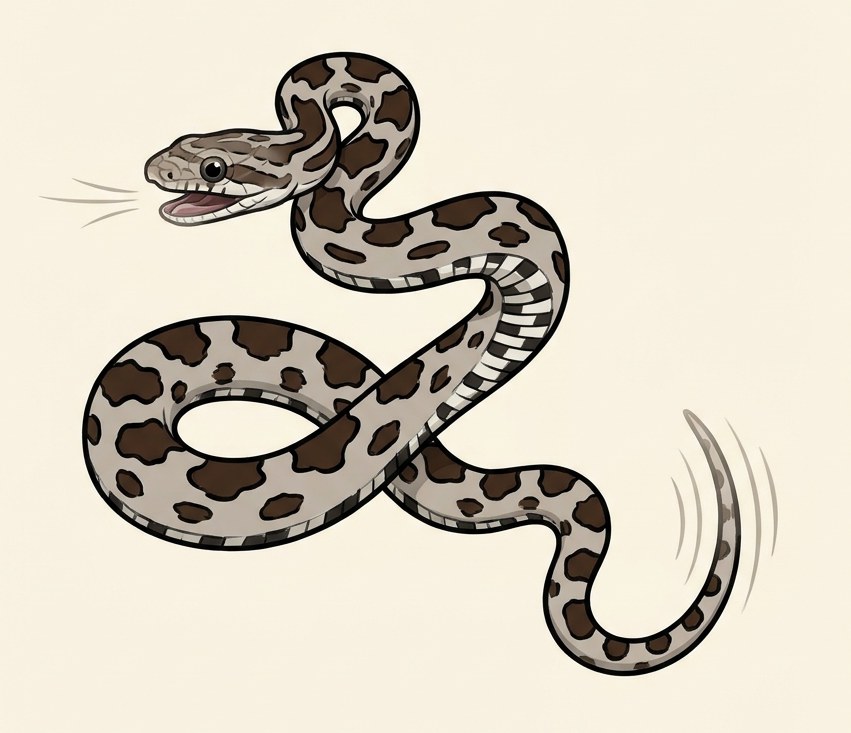
At this level, your snake is telling you as clearly as they can that the interaction needs to end. Signs include:
- Bolting to escape, or burrowing under the substrate or into a hide
- Freezing completely stiff and still
- Flattening or puffing up the body to look larger
- Vibrating the tail fast against the ground, which many snakes do, not only rattlesnakes
- Hissing and striking
- Curling into a tight ball with the head hidden inside, which ball pythons are known for
- Thrashing the head, neck, and body while being held
- Rolling onto the back with the mouth open, which is mainly seen in hognose snakes
What to do: Stop. Gently lower your snake into their enclosure near a hide, step back, and give them space and time. Do not hold on tighter or try again right away. If your snake often reaches this level, talk with a veterinarian who sees reptiles.
How snakes are different from dogs and cats
A few facts about snakes change how we read them.
Snakes cannot close their eyes. Snakes have no movable eyelids. A clear scale called the spectacle covers each eye, so open eyes do not tell you whether your snake is awake or asleep.
Tongue flicking is how snakes smell. Each flick carries scent to an organ in the roof of the mouth. Steady flicking means your snake is investigating. When the flicking stops and your snake goes still, slow down.
Grip shows how secure they feel. A snake wraps around you for support. A loose grip is normal. A grip that keeps getting tighter often means your snake does not feel secure.
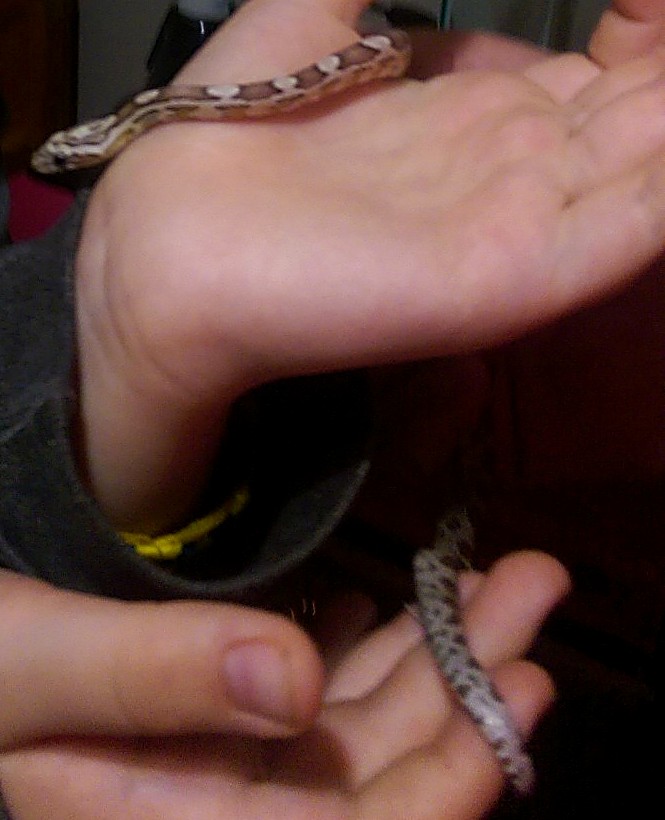
Staying still is not the same as comfortable. A snake who stays still in your hands may be frozen, not relaxed. Offer your hand or a snake hook and let your snake choose to climb on, and then look for the comfortable signs.
How to differentiate a defensive strike from a feeding strike
Both strikes happen fast, but what comes before and after is different.
Defensive strike: Your snake holds a tense S-shaped coil with the head pulled back and often hisses first. The strike is a quick jab with the mouth closed or barely open, and your snake pulls right back into the S-coil. A defensive strike means “go away.”
Feeding strike: Your snake leans forward and flicks the tongue toward the target. The strike is made with the mouth open, your snake holds on, and many species start to wrap. A feeding strike means your snake thinks you are food.
To prevent feeding strikes, wash your hands after touching prey, and touch your snake gently with a snake hook before using your hands. This tells your snake that a hand is not food.
Husbandry and handling at home
For snakes, welfare depends mostly on good husbandry, understanding the needs of the species, and enrichment. Enrichment can mean taking something away as much as adding something new. A snake who is too cold, too exposed, or stressed by their surroundings is more likely to be defensive when you reach in.
Every species of snake has different needs. The size and setup of the enclosure (vivarium), temperature and humidity, substrate, diet and feeding schedule, enrichment, and how much handling a snake will accept all depend on the species, and sometimes on the age and size of the individual snake. A corn snake, a ball python, and a hognose snake each need something different. Before you bring a snake home, and any time you are unsure, look up a care guide for your snake’s species and review it with a veterinarian who sees reptiles.
- Set up a temperature gradient and humidity that fit your snake’s species, with a hide on both the warm side and the cool side.
- Add climbing branches, burrowing substrate, or water, depending on what your species does in the wild.
- Reduce stress from outside the enclosure, such as heavy foot traffic, loud noise, or other pets staring in.
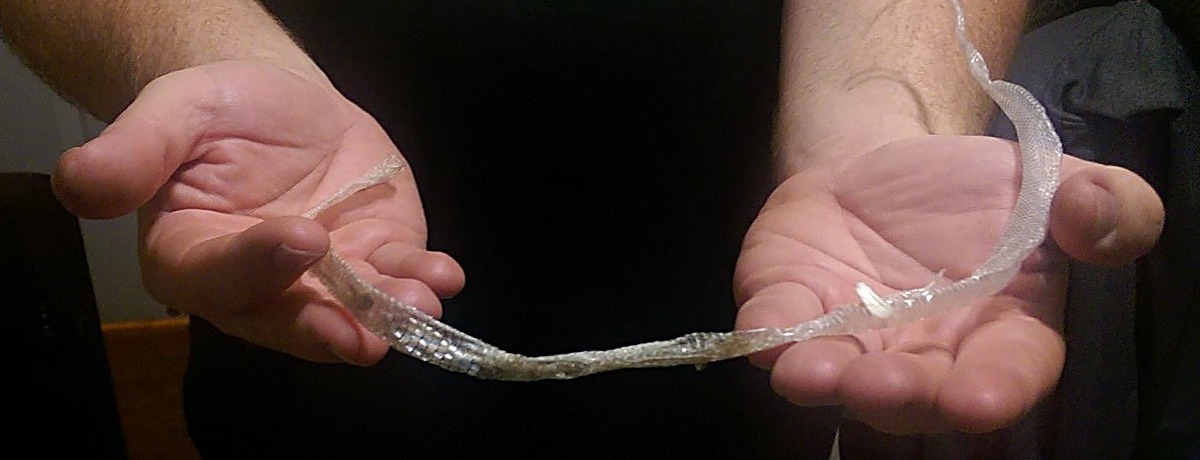
- Skip handling when your snake’s eyes turn cloudy or blue before a shed. Vision is reduced, and many snakes are more defensive at this time. A healthy shed usually comes off in one long piece, including the clear eye caps.
- Wait about 48 hours after a meal before handling, to lower the chance of regurgitation.
- Keep handling sessions short and predictable, and end them while your snake is still showing comfortable signs.
Training snakes with positive reinforcement
Snakes can be trained with positive reinforcement. In one published study, juvenile false water cobras learned to touch a target and move to a new space when asked, which made routine care easier (Williams and others, 2022). Target training and conditioning your snake to a hook can make handling, enclosure cleaning, and veterinary visits less stressful. Lori Torrini’s YouTube channel shows what snakes can learn when training is built on choice and positive reinforcement.
When to talk with your veterinarian
Pain and illness can change how a snake behaves. Talk with a veterinarian who sees reptiles if your snake:
- Suddenly shows more out-of-comfort-zone or distressed signs than usual, or becomes defensive during handling for no clear reason
- Stops eating for longer than is normal for their species and the time of year
- Has trouble shedding, or has retained shed on the eyes or tail tip
- Breathes with the mouth open, wheezes, or has bubbles around the nose or mouth
- Has swellings, wounds, or a change in their stool
You can search for a reptile veterinarian through the Association of Reptile and Amphibian Veterinarians.
Try the interactive guide
Practice what you learned in the interactive guide, Reading Your Snake. Tap through the three levels of body language, see illustrations of each one, and test yourself in a ten-round game called Go, Pause, or Stop.
Case studies on Ask Pet Vet welcome all species. If you have a question about your snake, send it through the contact page. Your snake may be featured in a future case study.
Resources
- A General Guide to Snake Body Language, a free poster by Lili Chin with Lori Torrini
- Lori Torrini on YouTube, videos on snake behavior, training, enrichment, and welfare
- Behavior Education, Lori Torrini’s website
- ReptiFiles, species care guides for snakes and other reptiles
- Association of Reptile and Amphibian Veterinarians, including a Find a Vet directory
Reference
Williams ML, Torrini LA, Nolan EJ, Loughman ZJ. Using classical and operant conditioning to train a shifting behavior in juvenile false water cobras (Hydrodynastes gigas). Animals. 2022;12(10):1229. Open access
© 2026 Christine D. Calder DVM, DACVB. All rights reserved.