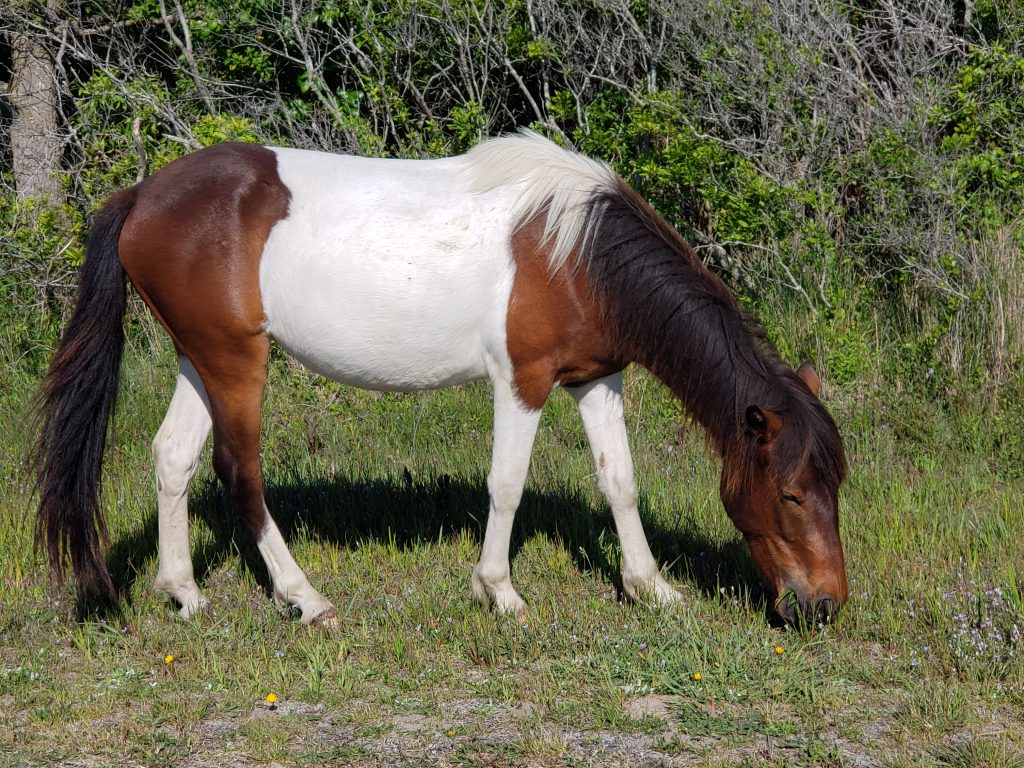
What does it mean for an animal to have good welfare? For many years, the answer focused mostly on preventing suffering: making sure animals weren’t hungry, thirsty, sick, or injured. Those things still matter. But today, veterinarians and animal welfare scientists understand that good welfare is about more than avoiding harm. It is about animals having positive experiences and having some control over their own lives.
From the Five Freedoms to the Five Domains
In 1965, a British government report described the Five Freedoms for farm animals: freedom from hunger and thirst, from discomfort, from pain, injury, and disease, from fear and distress, and the freedom to express normal behavior. The Five Freedoms were an important first step, and they are still widely used. But they focus mainly on what animals should be free from, not on what they need to thrive.
The Five Domains model, first developed by veterinary scientist David Mellor and colleagues in New Zealand and updated in 2020, takes a different approach. It looks at every part of an animal’s life and asks how each one affects what the animal actually feels.
The Five Domains
The model has four physical and functional domains, and a fifth domain that brings them all together.
- Nutrition. Does the animal have the right food and enough clean water? Can they eat in a way that is natural for them, such as grazing for horses or hunting and foraging for cats?
- Physical environment. Is the animal’s living space comfortable, safe, and clean? Does they have good footing, shelter, the right temperature, and places to rest, hide, and explore?
- Health. Is the animal free of disease, injury, and pain, and at a healthy body weight? Are medical conditions recognized and treated?
- Behavioral interactions. Can the animal interact with their environment, other animals, and people in ways they find rewarding? Can they make choices, explore, play, and avoid things they find scary or unpleasant? The 2020 update added interactions with people to this domain because how people handle and treat animals strongly affects their welfare.
- Mental state. This is the domain that matters most. It describes what the animal is feeling, such as comfort, pleasure, curiosity, and safety, or fear, frustration, pain, boredom, and hunger. Each of the first four domains affects the animal’s mental state.
The goal of the Five Domains is not just to prevent suffering. It is an animal with a life worth living, one with many more positive experiences than negative ones.
Why choice matters
The 2020 Five Domains model places special importance on agency, an animal’s ability to make choices and have those choices matter. An animal with agency can decide whether to approach or move away, eat now or later, rest or play, and take part in an interaction or leave.
Researchers who study animal agency have found that animals are built to engage actively with their world. Opportunities to explore, solve puzzles, and make choices are linked to positive emotions, while living in a world where nothing they do makes a difference is linked to boredom, frustration, and helplessness.
Choice is a primary reinforcer
In learning science, a reinforcer is anything that makes a behavior more likely to happen again. Some reinforcers are learned, such as a click or a word like “yes,” which become meaningful because they are paired with something the animal already values. Others are primary reinforcers. Animals do not have to learn to value them. Food, water, warmth, and safety are primary reinforcers.
Choice is a primary reinforcer too. Animals value choices in and of themselves, not just for what they get from them.
- In a classic study, pigeons consistently preferred an option that let them choose between keys over an option where the key was chosen for them.
- Researchers who study the need for control in people and animals have concluded that the desire for choice is biological, and that having control over what happens is rewarding in its own right.
- Many animals, including rats, pigeons, chickens, pigs, and primates, will work for food even when the same food is available nearby for free. This is called contrafreeloading. A large review of the research found that animals often choose earned food over free food, which suggests that the chance to act, explore, and make things happen is rewarding in itself.
Applied behavior scientist Dr. Susan Friedman has written extensively about how much animals value having a say in what happens to them. She teaches that the power to control one’s own outcomes is essential to behavioral health, and that good animal care and training should give animals as much control as possible, using the least intrusive methods that work. Her website, Behavior Works, has free articles and resources for caregivers and professionals.
Degrees of freedom
The idea of degrees of freedom comes from behavior analyst Dr. Israel Goldiamond, who developed the constructional approach in the 1970s. Instead of focusing on eliminating unwanted behavior, Goldiamond focused on building new behavior and increasing the learner’s options. Dr. Friedman has brought his ideas to animal training and care. Degrees of freedom are the number of options an animal has in a given moment. An animal whose only options are to do what is asked or to face something scary or unpleasant has very few degrees of freedom. Adding good options, such as the ability to walk away, choose a different resting spot, take a break, or opt out of a training session without consequences, increases the animal’s degrees of freedom. More degrees of freedom means more control, and more control means a safer, more comfortable animal.
Ask yourself a simple question in any situation: how many choices does my animal have right now? If the answer is one, look for ways to add more.
The SEEKING system
Neuroscientist Jaak Panksepp identified several core emotional systems shared by all mammals. One of them, the SEEKING system, drives animals to explore, search, forage, and investigate their world. When the SEEKING system is active, animals feel interested, curious, and eager, and these positive feelings help counter fear and frustration.
This is one reason sniffing, foraging, food puzzles, and Scatter Stations help animals who are worried or frustrated. They engage the SEEKING system and give the animal something to do that they choose. It is also one reason contrafreeloading happens: searching and working for food feels good.
Choice in training
This is why the most effective and welfare-friendly training gives animals real choices. When a dog can choose to start the next round of a game, a cat can choose to walk away, or a horse can choose to step into a trailer or back out, the choice itself is part of the reward. Animals who have choices learn faster, feel safer, and are more willing to try again.
Putting choice into practice
You can give your animals more choice in many small ways every day.
- Offer more than one option. Give cats several resting spots, scratching posts, and litter boxes in different places. Give dogs more than one bed. Give horses room to move away from another horse.
- Let them leave. Allow your animal to walk away from petting, handling, a training session, or another animal. An animal who knows they can leave is often more willing to stay.
- Wait for them to say yes. Use start buttons, such as eye contact in pattern games, and assent behaviors, such as resting their chin in your hand during grooming or handling. When your animal offers the behavior, they are saying they are ready. When they stop, you stop.
- Let them choose to participate. Teach your animal to walk into a carrier, crate, or trailer, step onto a scale, or put their own nose into a halter, instead of putting them there. Read more about trailer loading for horses and Low Stress Handling® for cattle.
- Enrich their world. Food puzzles, foraging, sniff walks, ACE Free Work, and new places to explore all give your animal chances to make choices and solve puzzles. Read about the five pillars of a healthy feline environment.
- Watch their body language. Your animal is telling you about their mental state all the time. Signs of fear, frustration, or pain signal that you should change what you are doing.
Good welfare is a partnership
Good welfare does not mean an animal gets everything they want, all the time. Animals still need veterinary care, safe boundaries, and routines. But within those boundaries, we can give animals far more choices than most of them have. Every choice we offer is a chance for a positive experience, and over a lifetime, those experiences add up to a life worth living.
Sources: Mellor DJ, Beausoleil NJ, Littlewood KE, et al. The 2020 Five Domains Model: including human-animal interactions in assessments of animal welfare. Animals. 2020;10(10):1870. Špinka M. Animal agency, animal awareness and animal welfare. Animal Welfare. 2019;28(1):11-20. Catania AC, Sagvolden T. Preference for free choice over forced choice in pigeons. Journal of the Experimental Analysis of Behavior. 1980;34(1):77-86. Leotti LA, Iyengar SS, Ochsner KN. Born to choose: the origins and value of the need for control. Trends in Cognitive Sciences. 2010;14(10):457-463. Goldiamond I. Toward a constructional approach to social problems: ethical and constitutional issues raised by applied behavior analysis. Behaviorism. 1974;2(1):1-84. Reprinted in Behavior and Social Issues. 2002;11(2):108-197. Inglis IR, Forkman B, Lazarus J. Free food or earned food? A review and fuzzy model of contrafreeloading. Animal Behaviour. 1997;53(6):1171-1191. Panksepp J. Affective Neuroscience: The Foundations of Human and Animal Emotions. Oxford University Press; 1998. Englund MD, Cronin KA. Choice, control, and animal welfare: definitions and essential inquiries to advance animal welfare science. Frontiers in Veterinary Science. 2023;10:1250251.